Create a simple calm-down space for your child.
Jan 16, 2026For many young people, Christmas is full of excitement and joy. But for others, especially children who prefer certainty and predictability, the whole season can feel completely overwhelming.
Their routines change. They're expected to meet people they don't know very well and there are new foods, new smells, and new experiences, and all of that can lead to worry, distress, and challenging behaviours.
So today I want to talk about how you can structure your home environment to encourage your child to use sensory tools to calm themselves when things just feel a little bit too much because sensory experiences can be surprisingly powerful in helping children regulate. And when a child is very dysregulated, sensory support is almost always more effective than trying to reason with them or offer rewards or consequences.
One simple thing you can do is to create a calming corner in your home. That is a cozy, predictable place where your child can go when they are feeling worried, angry, or sad. So it might include a comfortable place to sit, soft, soothing lighting and calming tools your child finds helpful- things like calming music or meditation apps, a weighted blanket, comforting scents, soft fabrics or visual reminders of what they can do to help themselves calm down. Some younger children absolutely love using indoor tent as their calming space.
But if you don't have room for a whole corner, you could make a calming box instead. This could be an old shoebox filled with sensory activities to settle their nervous system. You might include fidget toys, a smooth stone to stroke, scented items, breathing prompts, or anything that your young person has found helpful in getting them to regulate.
When you notice your young person starting to become worried, cross or distressed, gently encourage them to go to their calming corner or to get their calming box early before things escalate. If they don't yet know how to use the tools, stay with them and show them. But if your child prefers to be alone, to calm down, follow their lead.
There's no right way to do this. It's about supporting what works best for your child.
And to make this easier, I've created a list of sensory tools and calming experiences your child can use at home. You can download it here.
I'm going to have a little break over the Christmas period, so I hope you have a really lovely holiday and I'll see you in the new year with some exciting news about a new project I hope you're gonna be really interested in.
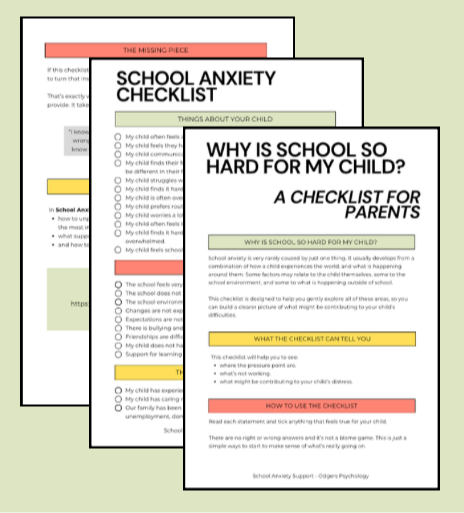
Want help making sense of your child’s school anxiety?
Download my free School Anxiety Checklist to quickly spot what might be driving your child’s school‑based worries, so you know where they most need support.
You’ll get a simple, parent‑friendly checklist you can use to:
- Get a clearer picture of why school feels so hard
- Spot where your child may need extra support at home and in school
- Feel more confident about what to raise with school staff and professionals
Nicky Odgers