Are the first weeks back to school too soon to worry about school anxiety?
Sep 10, 2026It's only the first week or two of the new school year. So if your child's struggled with school anxiety in the past, you might be watching them really closely and wondering, "Do I need to do something now, or should I give them a bit of time just to settle in?"
So the first thing I'd like to say is that this year isn't necessarily going to be the same as last year. Things might well be genuinely different. Your child will probably have new teachers. They might have a trusted adult they can talk to. They might be doing subjects they enjoy. They might have a great new group of friends within their new classes, or school staff might have put in accommodations that just make the whole school experience much easier for your young person.
So if things are going well, please do notice that. Get curious about what's helping because that can give you important information about what makes school manageable for your child.
But equally, if you're starting to notice some of the old signs creeping back, don't ignore them. Perhaps mornings are getting harder or your child's complaining of tummy aches or headaches. Perhaps they're asking for reassurance more often than usual. Perhaps they're becoming really emotional about school or even starting to say that they don't wanna go in.
So a difficult morning or an exhausted child doesn't necessarily mean that school anxiety is escalating. Starting a new school year can be tiring and it may take time just to adjust, but early signs are worth paying attention to. And you don't have to wait until your child's standing at the front door saying, "I don't want to go in," before you do something.
So what can you do? Well, first of all, I'd just notice what's changing. What are mornings like? What happens after school? How are they sleeping? What are they saying about school?
And then I'd see if I can find any patterns. Are particular days harder than others? Is there a difficult lesson or a friendship issue? Are they struggling with uncertainty or just becoming increasingly exhausted?
And then look at what's going well too. So when are the days that are easier and what's different about it? Perhaps the mornings when a particular member of staff meets them. Maybe they cope better on days when they know exactly what's gonna happen. Are lunchtime's easier now because they've got somewhere quieter to go.
Try and get curious with your child without firing out loads of questions. You could say something like, "I've noticed mornings seem a little bit harder at the moment. I'm wondering if there's something about school that's just taking up a lot of energy."
And don't feel you have to understand exactly what's going on before you go and talk to the school. You can simply say, " I'm noticing things are starting to get harder. Can we please keep an eye on this together?"
Not every wobble at the start of term means that school anxiety is escalating. And if things are getting better this year allow yourself the opportunity to notice it and enjoy that. But you don't need to wait for the crisis either. If difficulties continue for a couple of weeks then it's time to start taking action. And if your child's already experiencing high levels of distress, I just wouldn't wait.
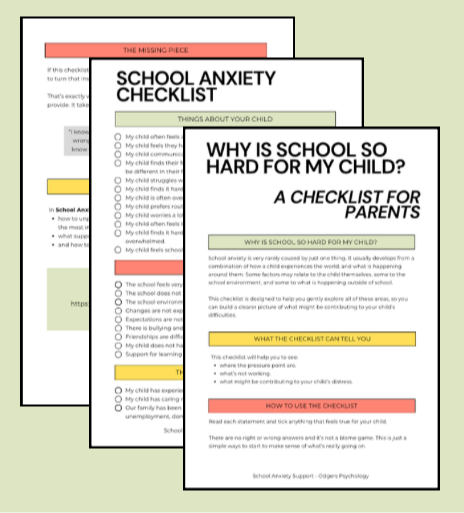
If you're starting to notice some early signs, but you're not really sure what's going on, you could download my free school anxiety checklist. It can help you think through some of the possible barriers and start looking for patterns. You can download it here.
Want help making sense of your child’s school anxiety?
Download my free School Anxiety Checklist to quickly spot what might be driving your child’s school‑based worries, so you know where they most need support.
You’ll get a simple, parent‑friendly checklist you can use to:
- Get a clearer picture of why school feels so hard
- Spot where your child may need extra support at home and in school
- Feel more confident about what to raise with school staff and professionals

Nicky Odgers