The Hidden Causes of School Anxiety
Feb 05, 2026When children experience distress about school, it's often seen as simply an anxiety problem. The assumption can be that worries are out of proportion and that what's really needed is for the child to learn how to manage their worries better. But we now know for most children, this isn't the full picture.
A huge proportion of children who struggle with school are neurodivergent, most commonly autistic or with sensory processing differences, or ADHD. And because of the way they experience the world, school may genuinely be much harder for them than for their neurotypical peers.
For example, some children experience loud noises as physically painful. Others have a strong need for predictability and may find sudden change very distressing. And other children have differences in social understanding and may find it hard to join in complex group interactions in the playground. For these children, busy corridors, crowded classrooms, and unstructured times like break or lunch can feel completely overwhelming.
Children with differences in executive functioning may find it difficult to stay focused, remember instructions or to organise themselves and their equipment. And children who struggle with literacy may have difficulty completing their work and may feel like they're failing every day.
These are real challenges, not simply irrational worries that can be talked away.
And these difficulties are also not always obvious to adults. Some children mask how they feel, some struggle to put their experiences into words, and some may not yet have a diagnosis. And this can make it really hard for parents and teachers to fully understand what's going on.
Now, this doesn't mean that learning to manage anxiety isn't important. Supporting children to recognise, understand, express, and regulate their emotions is incredibly valuable. And these are skills that they will benefit from throughout their lives, not just help them to cope with school.
But alongside this, we also need to look really carefully at the environment. If something in the school day is causing distress, we may need to adjust demands or increase support in a really targeted way. The key is understanding exactly what your child is finding difficult so that the right changes can be made.
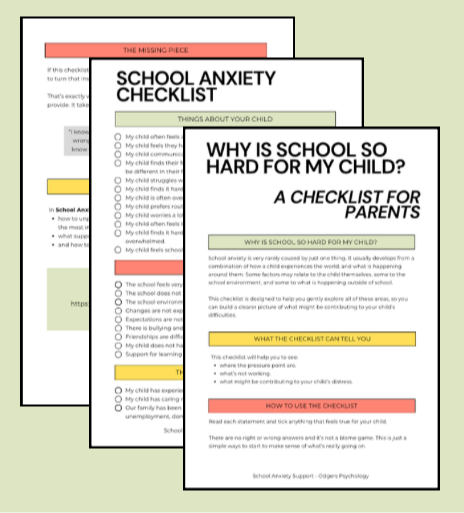
To help with this I've created the school anxiety checklist that you can download here.
Want help making sense of your child’s school anxiety?
Download my free School Anxiety Checklist to quickly spot what might be driving your child’s school‑based worries, so you know where they most need support.
You’ll get a simple, parent‑friendly checklist you can use to:
- Get a clearer picture of why school feels so hard
- Spot where your child may need extra support at home and in school
- Feel more confident about what to raise with school staff and professionals

Nicky Odgers