Why it's so hard to stay calm - and what can help.
Apr 16, 2026When your child is distressed about school, it's completely understandable that you might also feel upset . It can bring up a whole load of really strong emotions. You may feel worried, frustrated, helpless, or just a sense of panic about what this is all going to mean long term.
And that reaction totally makes sense. It can feel like there is a load at stake. As parents, we're wired to protect our children. So when we see our children struggling, especially with something as important and unavoidable as school, it can feel really urgent - like we need to sort things out right away. And on top of that, there's often pressure from schools, worries about attendance, maybe concerns about prosecution, or worries about them falling behind.
But there's something else that's going on here as well. When your child is distressed, their emotions can feel really intense, and emotions are contagious, so it's very easy to absorb their anxiety without even realising it. And before you know it, you are both caught up in this cycle where everything feels heightened and overwhelming. And that's often when things escalate, not because anyone's doing anything wrong, but just because everyone's nervous system is under pressure.
And here's the really important bit. In those moments, one of the most helpful things you can offer your child is your calm.
I know that is much easier said than done. Staying calm when your child is melting down or really distressed about school is really, really hard. But when children are anxious, they're not thinking logically. Their thinking brain has gone completely offline and in that state, they look to you to work out if they're safe.
So if we are overwhelmed, it can unintentionally send the message that something is really badly wrong. Whereas if you stay calm, even if you don't fully feel it inside, you're showing them, "we've got this, you're safe, we can figure it out".
So how do you do this? Well, one of the simplest things you can do is just to try and slow everything down. You don't need to solve the whole situation. Just focus on getting through the next few minutes.
It also helps if you can notice your own reaction. If you feel yourself getting pulled in and beginning to panic, just take a breath. Even a few seconds can help you respond rather than react. And if you need to, step away for a minute or two to a different room to allow you the chance to calm down.
You can also talk to yourself with pre-prepared calming statements such as, "I can deal with this. I've done it before", or " the best thing I can do at the moment is to stay calm" or "my body's just reacting in an anxious way. I'm going to feel better in a minute".
And it helps to have a plan about what to say and do when your child is anxious. So remember, the key to helping your child calm down is to label and validate their feelings, and then offer a suggested way to help them calm down even more. So you could say something like, "I can see you're worried. I know this is really hard. But you're safe, and I'm here to help. When you are ready, we can do some breathing together, and that will help you feel better."
And lastly, be kind to yourself. You're dealing with a really difficult situation, and you're unlikely to get it right every day but being a calm, supportive presence most of the time will really help.
If you'd like a bit more guidance about how to support your child with those difficult school mornings, you can download a free guide by clicking here.
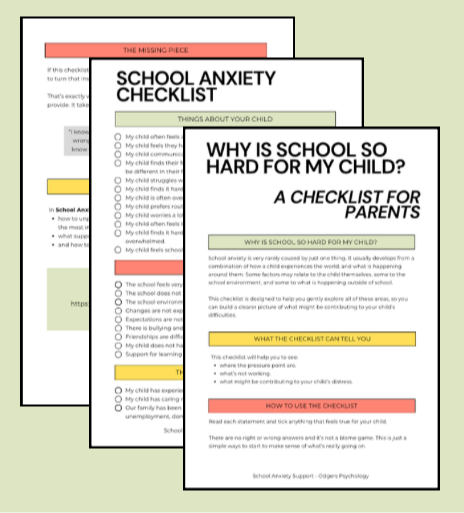
Want help making sense of your child’s school anxiety?
Download my free School Anxiety Checklist to quickly spot what might be driving your child’s school‑based worries, so you know where they most need support.
You’ll get a simple, parent‑friendly checklist you can use to:
- Get a clearer picture of why school feels so hard
- Spot where your child may need extra support at home and in school
- Feel more confident about what to raise with school staff and professionals
Nicky Odgers